
S9 E8: Professional Development as an Agency Operating System with Tayhlor Blackwell of REED
Professional development is often treated as something separate from the day-to-day work: attend a conference, take a course, share what you learned, and move on. But real growth requires more than occasional training.
In this episode, Tayhlor Blackwell, Partner at REED, explains how her agency made professional development part of its operating system and everyday culture. What began as a response to rapid organizational growth evolved into a structured approach that connects individual development with the goals of the firm.
Tayhlor discusses the importance of cultivating a growth mindset, setting intentional goals, and creating regular opportunities for feedback. She also explains why feedback needs to be timely, transparent, and specific—and why approaching difficult conversations with curiosity helps both the person giving feedback and the person receiving it.
Tayhlor also explains the business case for investing in people. When professional development is tied to organizational priorities, the benefits can extend beyond employee retention to stronger client relationships, deeper expertise, and better systems that remain valuable even when employees eventually move on.
Key Takeaways
- Professional development is more effective when it is embedded in everyday agency culture rather than treated as an occasional perk.
- Individual development goals should support both the employee’s growth and the broader goals of the organization.
- A growth mindset requires being willing to acknowledge what you do not know, take risks, learn from mistakes, and keep developing at every level of the organization.
- Effective feedback should be timely, transparent, and specific, with curiosity helping turn difficult conversations into opportunities for growth.
- Investing in employees can strengthen client service, organizational knowledge, and internal systems even if those employees eventually take their experience elsewhere.
About the Guest
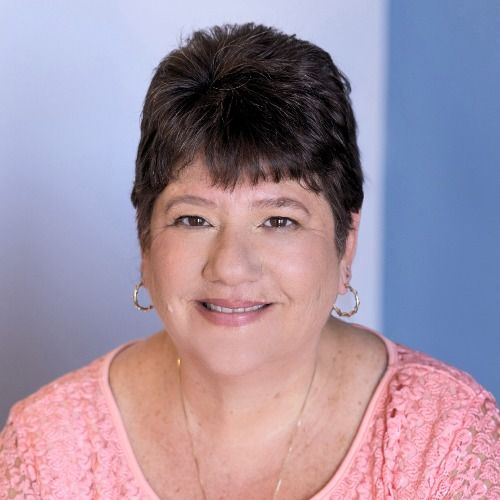
Tayhlor Blackwell is a partner at REED, bringing more than a decade of strategic communications experience to the agency. In addition to delivering results for clients, she leads the agency's professional development program, working closely with team members to build personalized growth paths and fostering a collaborative, high-performing culture. Her leadership also includes shaping internal initiatives that recognize team achievements and strengthen the agency's sense of community.
Tayhlor began her career in music journalism after graduating from Middle Tennessee State University, covering Nashville's entertainment scene and interviewing industry icons including Dolly Parton. That foundation gives her a strong command of media relations and a deep understanding of Nashville's entertainment and business landscape. She is based in Unionville, Tennessee, where she lives with her husband, Stetson, and their son, Ames.
About the Hosts
Abbie Fink is president of HMA Public Relations in Phoenix, Arizona and a founding member of PRGN. Her marketing communications background includes skills in media relations, digital communications, social media strategies, special event management, crisis communications, community relations, issues management, and marketing promotions for both the private and public sectors, including such industries as healthcare, financial services, professional services, government affairs and tribal affairs, as well as not-for-profit organizations.
Dr. Adrian McIntyre is a cultural anthropologist, media personality, speaker, and strategic communications consultant for PR agencies and marketing firms. He's lived in over 30 countries and spent more than a decade in the Middle East and Africa as a researcher, journalist, communications adviser, media spokesperson, and storytelling consultant. He earned a PhD from the University of California, Berkeley, where he was a Fulbright scholar and National Science Foundation fellow. Adrian helps agency leaders strengthen their positioning, sharpen their messaging, boost their visibility, and win new clients by replacing impersonal, intrusive and ineffective marketing tactics with authentic human conversations.
Follow the Podcast
If you enjoyed this episode, please follow PRGN Presents in Spotify, Apple Podcasts, or any other podcast app. We publish new episodes every other Thursday. To have them delivered automatically and free of charge, just choose your preferred podcast player from this list, open the app, and click the button to “Follow” the show: https://prgnpodcast.com/listen
Need to hire a PR firm?
Leading a business effectively in today's fast-paced world requires expert guidance and a strong communications strategy. No matter where you do business, PRGN has a member agency in your region with the deep industry expertise, international experience, and local market knowledge you need to connect with your target audience and achieve your goals. Find a PR firm near you »
Transcript
From the Public Relations Global Network, this is PRGN Presents. I'm Adrian McIntyre.
Abbie Fink:And I'm Abbie Fink, president of HMA Public Relations in Phoenix, Arizona, and a founding member of PRGN. With public relations leaders embedded into the fabric of the communities we serve, clients hire our agencies for the local knowledge, expertise, and connections in markets spanning six continents across the world.
Adrian McIntyre:Our guests on this bi-weekly podcast series are all members of the Public Relations Global Network. They will discuss such topics as workplace culture creative compensation and succession planning the importance of sustainability and environmental social and governance programs crisis communications and outside-of-the-box thinking for growing your business
Abbie Fink:For more information about PRGN and our members, please visit prgn.com. And now let's meet our guest for this episode.
Tayhlor Blackwell:I'm Tayhlor Blackwell. I'm a partner at REED Public Relations. REED is a PR and marketing agency based in Nashville, Tennessee. We specialize in multi-unit food and beverage. But if you ask the team what my favorite part of the job is, it's helping them know where they want to go and how to get there.
Abbie Fink:Oh, I love that.
Tayhlor Blackwell:Okay. Yay!
Abbie Fink:That's so much better than, and I provide this type of counseling and this, that's fantastic. I have been a big proponent of professional development for my entire career as a manager. And I think partly because I was the beneficiary of one of my earlier bosses that believed so strongly in professional development. And it was go to a conference, attend a seminar, read this book. You know, there was something about trying to learn and be better. We would go to this event. We would come back. We would report back at a staff meeting that we had this great time and we learned this wonderful thing, submit our receipt to get reimbursed for the cost. And that was pretty much the end of the discussion about professional development. And as much as I value what it can do, I do think sometimes it is a start and stop activity and that sometimes it's not, although we're investing in terms of a cash outlay and we're investing in giving our team the time, you all have taken this investment a little bit further and really created professional development as part of your operating system, as part of the culture. And we had the opportunity to talk a little bit about this at another professional development conference. And I was so intrigued that I wanted to finish ... and continue the conversation with you a little bit on how you all focus this
Abbie Fink:and make it really part of your company structure. So if we could level set the conversation first, you know, how did this focus on professional development become such an important part of REED and, you know, the sort of the history of how it came about? And then we'll dive in a little bit as to what it means and how it's living itself out in your organization. And really, I think the impact it can have on other businesses as well.
Tayhlor Blackwell:Yeah. And Abbie, I love that exactly how you explained what professional development looks like for you. And I would say yes and yes, it's all of those things. It's going to the conference. It's joining a webinar. It's taking notes and reporting back to the team. But it's so much more than that, too. And you know that as an advocate for professional development. So like you said, we truly adopted it into our own operating system. And what that means at REED is it's part of our everyday culture. So at REED, what happened here is in 2022, I, alongside two agency partners, stepped up to lead the day-to-day operations. And because of that, our leadership team was growing so quickly as things happen quickly in agency life. We know that.
Tayhlor Blackwell:But that left a gap for the account team. So because we stepped up quickly, we also needed the account team to follow suit, not only quickly, but sustainably. So we sat down, we were like, okay, how are we going to make this work? You know, we can't make things happen out of nothing. We have to be intentional about employees' growth. So we put a name to it. We decided that we would introduce an official professional development program. I championed this I was so passionate about it because I looked at the opportunities I had gotten at REED and how quickly I had moved up and with intention as well and really wanted to pour that back into our employees so
Tayhlor Blackwell:Yeah really rolled it out and then I would say too you know how do we treat this not as only a perk we were getting feedback time and time again in performance reviews that REED's That willingness to invest in professional development was one of our employees' favorite benefits that they were getting each year, which says a lot, right, when you're giving them raises or bonuses and, you know, actual money. But what they truly wanted was time and attention to their own growth. So, you know, we reflected and we said, okay, how do we make this a bigger thing at our agency? Well, I don't know how to make it a bigger thing other than really implementing it into our everyday culture. So that's what we did.
Abbie Fink:And I think it's interesting, the acceptance of it as a benefit and something that your team looks forward to, because oftentimes professional development sounds like I've got to do something after hours. I've got to do something on the weekend. I've got to take away time from something else in order to go to this seminar or go to this conference. And as much as the future looking person would say that's an opportunity for me to learn and grow and get better at what I do. It is difficult sometimes for that to come across and say, look, we're giving we want you to do this. We think it's beneficial for you. It's going to be beneficial for us as well. So I'm intrigued by the fact that it was so well received. And so, you know, part of what the team at the time wanted to hear. How does it play out now you know three four years later how has it been able to stay and be sustainable, and allow for the team members then to take that growth and as your agency grows and the team grows how do you maintain, that level of commitment to it and have it still be something that's so important to the organization.
Tayhlor Blackwell:Yeah that's a great question Abbie and in your question I heard the word growth so many times. And that's really what we focus on in our mindset too at work is how do we adopt a growth mindset? And the funny thing here is I think what worked so well at our agency is that The person leading our professional development program, and yes, I'm talking about myself, actually had a fixed mindset in so many different ways. And I didn't know that I had a fixed mindset until I learned truly what it was and I was willing to name it. So what I've boiled this down to in our employee performance conversations is that a fixed mindset is fear of failure. That's all it is. It's fear of just, you know, willing to put yourself out there, willing to enjoy the process, right? you know, it's not a destination. We're on a journey together. So I think what was so cool for our agency is that I was willing to just name that and say, okay, wait, no, actually, I think I have a fixed mindset here. And that's okay. Maybe I don't know this thing, or I've not done this thing before. But I'm willing to learn it and to learn it alongside of you. So I think that participation from the top down, really said a lot and helped it become part of our everyday culture.
Abbie Fink:And is this culture, this mindset, something that is universal across all levels of your organization? So from leadership through the account services team and maybe your support staff, does everyone have this opportunity to participate and benefit from the PD program, the professional development program?
Tayhlor Blackwell:Yeah, that's exactly it. And what we have found that's worked for us is that around that six-month mark of employment, you are eligible for professional development at REED. So not only eligible, but also expected to participate. It's not really an option to have a fixed mindset at REED. We truly do
Tayhlor Blackwell:We do preach that growth mindset and we do expect all employees, whether it's Lauren Reed, founder of our agency or the new account coordinator starting tomorrow. So they start at that six month time frame. And what that really looks like is sitting down with their manager and being intentional about goal setting. So, OK, what things do you really want to work on? What's going to help you grow in public relations, but also help the agency along the way? Because, you know, we do care so much about these employees on a personal level, but really what we're here to do is to serve our agency and to help it grow as well. So tying every single goal back to the agency has been fruitful for us. And then where we go from there is it's part of our everyday communication with that employee. You know, we're giving feedback in real time. We have monthly one-on-ones with this person. And then they also are part of our biannual performance review system too, where, you know, we zoom out, we look at patterns, performance trends, and all that good stuff.
Adrian McIntyre:Now, Tayhlor, you just said the F word, feedback. And one thing I know, having led professional development programs, both inside and outside of companies is that a lot of times feedback is what the leaders most don't want. In fact, if you look at the dysfunctional cultures of other organizations, they are often explicitly designed to prevent there from being any feedback, reaching the ears of the leadership. You've taken a very different approach. You embrace the feedback. This is probably one of those things that's maybe easier to talk about than to actually experience in the moment. Can you talk with us about both kind of your philosophy around feedback and then get real with us. What's it actually like when someone's having a difficult conversation with you? And how do you manage that?
Tayhlor Blackwell:Yeah, the key here is approach everything with curiosity. You're exactly right that feedback a lot of times doesn't feel natural to receive, but also to be the one giving it. You have to teach that process. And in both situations, staying curious. So we worked years ago with a business coach, Elise Mitchell, who a lot of us PRGNers know and love. Hi, Elise. We worked with her on developing team norms. This was her recommendation. And really what the norms were was, okay, let's clearly outline what's expected of employees when they come to work each day. And also, you know, what we expect them to bring to the table as well. So part of those norms, we have three norms outlined, and I bet you're going to guess it. One of those norms is all about feedback. So that's how intentional we are here because we really do feel like true feedback is the catalyst for growth.
Tayhlor Blackwell:What feedback looks like at REED, it has to be timely, transparent, and specific. So going into that conversation as a manager, especially as a new manager, when you have to be the one to deliver this tough feedback for the first time, we found that the SBI model is so helpful to us. So what that stands for, if you're not familiar, is situation, behavior, and impact. So approaching that conversation with curiosity, also being as the one receiving the feedback, approaching that with curiosity as well.
Abbie Fink:So connect for me, though, how feedback is. And professional development. Because again, if our thinking about professional development is I am going to a seminar and I'm coming back and telling you I learned, you know, five new things on how to be a great manager, where does the feedback play into the professional development part? And because I hate it and love it all at the same time, right? I don't want anyone to tell me unless it's really good feedback. But the most valuable feedback is the stuff that nobody wants to hear and is the most difficult to give. But how do you connect the two? How does feedback and professional development align? What does it, how do you bring them together?
Tayhlor Blackwell:Exactly. Brene Brown coined this fabulous saying that clear is kind. And that is something that we truly had to get behind. But if you're not clear in the feedback that you're giving, then that's really not helping the person grow, right? It might be saving face in that situation, but you're not helping foster their long-term growth. So that is actually written in our team norms too. Right next to feedback, you'll see it bolded, is clear as kind. And that's how we tie the feedback to the person's actual professional development and how they're performing in the day-to-day.
Abbie Fink:So it's more about, or actually it's less about attending a physical activity, and coming back to report on it. It's then what do they do with that information and how does that impact the organization? How does that impact their team? How does that impact your clients? And moving the organization forward. And I think that's where I'd like to take this next is this is a very intentional effort to, formalize a program within the organization to help your team and REED grow. But I have to believe that you've seen the benefits of this, externally as well in relationship building with clients and prospects and, you know, maybe the way you coach and counsel and guide clients. So what has been the sort of the external impact of this internal effort?
Tayhlor Blackwell:Yeah, I think it's so cool that when you start approaching everything with curiosity, how many more things you can learn in the day-to-day too. I think it's helped us become better specialists. It's helped us learn more about our clients' industries, right? We're working at agencies, so we're working with a variety of different clients and industries. And I think rather than going into that meeting and saying, hey, I know everything, you've hired me for a reason, I've got to be the one to share all this great advice. It's saying, hey, let me learn about your industry a little bit more, and then I'll give you my expert opinion on where to go for, I'll give you my expert opinion on where to go from a PR perspective.
Abbie Fink:And how has that been received from the client? Because I'm hoping if you're encouraging feedback and discussions internally, you're asking for that same thing externally. Again, feedback from clients, we only want to hear that they love us, but sometimes they have to tell us they don't or don't like a particular project. So I'm curious, you know, on that feedback loop, what's happening externally as well.
Tayhlor Blackwell:Yeah, and we actually have a great example of this that we got some not so fun feedback to receive recently from a client. And the cool thing, it's actually a success story and I'll share a little bit about that. But the cool thing looking back is that we truly wouldn't have been able to impress them or to pivot if they hadn't been the ones to practice that clear as kind, And, you know, give the transparent, timely, specific feedback. So in that case, you know, we got the feedback, you know, they weren't exactly happy with they had been a longtime client and they were just like, OK, well, What's the point of public relations? Why are we paying for this? What are we really doing? And one of REED's core values is fresh approach. And we were so excited to be able to take that fresh approach. We just didn't know that we had free reign to do that, right, with a longstanding retainer client. So that was a great example of how, you know, really welcoming that feedback and taking action on it. And we've actually got a better relationship with them now than we did at the start of the year.
Abbie Fink:So the other maybe challenge that business owners have, or you refer to the fixed mindset, the things that we think about, is I'm going to make this investment in this individual on my team. I'm going to give them the opportunities that I see a future for them. And they're going to just take that and leave anyway. They're going to take it and go somewhere else with that information. Maybe that's true. Maybe not. but it certainly is a possibility. From a management perspective, of an ownership perspective, you know, how do you address that? How do you get us out of that idea that these investments may end up walking out the door someday, but for the benefit of our time together now, they're still worthy of our investment and our growth strategies, and demonstrating to them that they're important to us today.
Tayhlor Blackwell:The really cool thing about professional development is not only that you're pouring into these individual employees, but with being intentional around goal setting, we're able to tie those goals to specific company goals, too. So, yes, we want them to grow. We want to foster their growth. But in doing so, you've got to be able to make your plea of how is the agency going to benefit from this? So no matter what happens, you know, in a year or five years from now, if that employee that you poured into does end up taking their talents elsewhere, you still have a better system in place at the company in doing so.
Adrian McIntyre:Thanks for listening to this episode of PRGN Presents, brought to you by the Public Relations Global Network.
Abbie Fink:Episodes are also available on our website, along with more information about PRGN and our members, at PRGN.com.