
S9 E2: Marketing the Heartland and Investing in Niche Content with Natalie Ghidotti
Natalie Ghidotti, owner of a Little Rock-based PR agency, discusses the unique challenges that smaller markets present to PR practitioners and the power of combining a global network with deep local expertise.
The middle of the country often gets forgotten in business. Natalie explains how her team at Ghidotti helps family-owned, B2B companies in the Heartland reach a national audience while staying true to their regional roots and Midwestern or Southern identities.
She also highlights the importance of playing the "long game" in agency business development. By investing non-billable hours into building Lithium Link, a niche newsletter about Arkansas's emerging lithium industry, her firm has successfully positioned itself at the forefront of the state's economic future—demonstrating that treating your own agency like a client can yield massive networking dividends down the road.
Natalie also talks about taking a successful Arkansas pharmacy benefit manager (PBM) reform campaign and scaling those strategies to other states, successfully beating a $7 million corporate advertising campaign with the power of earned media.
Ultimately, Natalie stresses that whether you are scaling a local legislative win across the country or helping an outside brand break into a new region, success hinges on genuine community relationships, boots-on-the-ground knowledge, and utilizing networks like the Public Relations Global Network (PRGN) for national and international reach.
Key Takeaways
- Understanding local markets and regional nuances is vital for developing effective public relations strategies and campaigns.
- Building deep local relationships is essential for PR agencies to offer global brands authentic regional relevance and elevate client engagement.
- Investing in content creation for emerging industries poised for future growth, such as lithium in Arkansas, can position agencies as thought leaders and open future business opportunities.
- Networks like PRGN play a crucial role in providing localized service with global reach, enhancing an agency's value proposition.
About the Guest
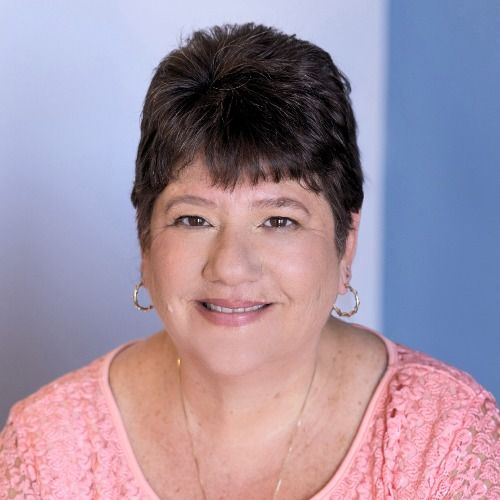
Natalie Ghidotti, APR, Fellow PRSA, is founder and CEO of Ghidotti, a public relations and content marketing agency she founded in 2007 that serves clients throughout the Heartland. She serves as Regional Vice President for North America for the Public Relations Global Network, where the agency represents the Southern region in this global network of 50 PR agencies. She is Immediate Past Chair for the Executive Committee for the Public Relations Society of America’s national Counselors Academy and was recently named a Class of 2025 inductee into PRSA’s College of Fellows, the highest national distinction in the public relations profession.
Beyond her agency work, Natalie is an active member of the Little Rock community, serving on the board of directors for the Arkansas Symphony Orchestra and the Arkansas Museum of Fine Arts and as Vice President for the Downtown Little Rock Partnership Executive Committee. She is a past president of The Rotary Club of Little Rock and the Arkansas Women’s Leadership Forum and is a graduate of both Leadership Little Rock and Leadership Arkansas.
About the Hosts
Abbie Fink is president of HMA Public Relations in Phoenix, Arizona and a founding member of PRGN. Her marketing communications background includes skills in media relations, digital communications, social media strategies, special event management, crisis communications, community relations, issues management, and marketing promotions for both the private and public sectors, including such industries as healthcare, financial services, professional services, government affairs and tribal affairs, as well as not-for-profit organizations.
Dr. Adrian McIntyre is a cultural anthropologist, media personality, speaker, and strategic communications consultant for PR agencies and marketing firms. He's lived in over 30 countries and spent more than a decade in the Middle East and Africa as a researcher, journalist, communications adviser, media spokesperson, and storytelling consultant. He earned a PhD from the University of California, Berkeley, where he was a Fulbright scholar and National Science Foundation fellow. Adrian helps agency leaders strengthen their positioning, sharpen their messaging, boost their visibility, and win new clients by replacing impersonal, intrusive and ineffective marketing tactics with authentic human conversations.
Follow the Podcast
If you enjoyed this episode, please follow PRGN Presents in Spotify, Apple Podcasts, or any other podcast app. We publish new episodes every other Thursday. To have them delivered automatically and free of charge, just choose your preferred podcast player from this list, open the app, and click the button to “Follow” the show: https://prgnpodcast.com/listen
Need to hire a PR firm?
Leading a business effectively in today's fast-paced world requires expert guidance and a strong communications strategy. No matter where you do business, PRGN has a member agency in your region with the deep industry expertise, international experience, and local market knowledge you need to connect with your target audience and achieve your goals. Find a PR firm near you »
Transcript
From the Public Relations Global Network, this is PRGN Presents. I'm Adrian McIntyre.
Abbie Fink:And I'm Abbie Fink, president of HMA Public Relations in Phoenix, Arizona, and a founding member of PRGN. With public relations leaders embedded into the fabric of the communities we serve, clients hire our agencies for the local knowledge, expertise and connections in markets spanning six continents across the world.
Adrian McIntyre:Our guests on this biweekly podcast series are all members of the Public Relations Global Network. They will discuss such topics as workplace culture, creative compensation and succession planning, the importance of sustainability and environmental, social and governance programs, crisis communications, and outside of the box thinking for growing your business.
Abbie Fink:For more information about PRGN and our members, please visit PRGN.com. And now let's meet our guest for this episode.
Natalie Ghidotti:Hi, I'm Natalie Ghidotti. I own a PR agency here in Little Rock, Arkansas. I'm also the Regional Vice president of North America for PRGN and the immediate past chair of PRSA Counselors Academy. So happy to be here.
Abbie Fink:And Natalie, I was just reminiscing about some of our past travels, both through our involvement with PRSA Counselors Academy and with our involvement with the Public Relations Global Network. And one of the things that I so appreciate about our networks, our intermixing of our networks, is this deep understanding of what we do from a public relations and marketing communications perspective and what we bring to the table from a national and international perspective. Right. We have access to some really smart people around the world that can help us understand and develop campaigns.
Abbie Fink:And what that means is our local knowledge and the things that we understand and that we know in our own markets really give us this added strength in how we position ourselves. In fact, the network itself, you know, talks about being "the world's largest local agency." We talk about having, you know, global scale, global knowledge, but we have this incredible amount of local relevance which brings knowledge and expert expertise to the types of clients that we're working on. And it's something that you and I have talked about before, but it's really, I think, becoming even more a point of differentiation in how we can talk about the work that we do and what we bring to the table. Both from a knowledge base, but a deep understanding of our industry, but our markets as well. And I'm assuming you're seeing that in Little Rock and in the state of Arkansas as well, in terms of what you understand about your markets, marketplace and what you bring together for the clients that you're serving for.
Natalie Ghidotti:Sure. Totally agree with you, Abbie. I mean, we're in a smaller state in the South. So feel that for sure. You know, our clients, we have a lot of clients that are coming from different areas of the United States, different parts of the world, to do business in Arkansas. But they very much need a local perspective to be able to communicate with those target audiences. And we know with everything going on in that AI age and all these things, that really directly speaking to target audiences is so vital and so important.
Natalie Ghidotti:And so that local piece of it is just the foundation of that, right? That you really understand that person from a very micro, local level. So I love working with companies that are coming from elsewhere and coming into Arkansas because it's kind of the best of both worlds. They're bringing their vast knowledge and experience, but pairing it with, you know, what Arkansans care about, and particularly the South, which is very different than where you are in Phoenix or our friends on the Northeast coast or West Coast.
Abbie Fink:I've been doing this a long time, as you have as well. And I, you know, as my, as the career has evolved and as what we've done has evolved, the idea that you could work outside of your market is still relatively new. I mean, you know, in the last maybe 10 or 15 years or so, where the idea was that, you know, we could be elsewhere, we could expand our knowledge and expertise into other markets. And we do. We do that regularly. But oftentimes the ... when the opposite happens, which is a business as you've described, is looking to come into a market, what we bring is more than just our ability to do the work. It's really knowing the marketplace, and it's knowing that the mayor likes this coffee shop and that this is the issue that's facing our community. And this is the best road to take because these other ones are under construction. I mean, those have nothing to do with what we do for a living, but it's really about having that knowledge. And so I know how we incorporate that information into our new business development. You know, we certainly highlight our relationship with PRGN and in this case with, you know, you and I, our involvement with PRSA, which gives us, you know, on-the-ground support and knowledge from other places. But we really, really talk about what we know and being a active member of our community.
Abbie Fink:That we run a business here, that we are involved in our community, you know, we hold leadership positions with organizations, nonprofits, civic groups, and that is a selling point and something that we capitalize on. How are you embracing that? How are you sharing that information when you're talking with new clients or meeting with prospects. You know, what is that driver that allows you to bring in that local knowledge and really changes the conversation with that prospect?
Natalie Ghidotti:Yeah, you know, I've had my agency for 20 years and just what you said, a lot of it is that networking and being so plugged into your community. And, you know, I could rattle off tons of boards that I've been on and that I serve on now and decision makers that I'm in constant contact with, which is all amazing and definitely is a selling point for us when we're talking to companies out of Arkansas who are needing that foothold and need those partnerships and relationships.
Natalie Ghidotti:But something new that we started two years ago, kind of in the new business development arena, but also just kind of media is ... so, lithium is a huge future industry for Arkansas. There is a lot of lithium in south Arkansas. It's kind of like, you know, the oil boom, right? And our entire world is dependent on lithium. And so it's an industry that's really being looked at on down the road as the next big thing in Arkansas.
Natalie Ghidotti:And so two years ago, we started a newsletter —it's really a LinkedIn article feed — on LinkedIn, that's all about lithium. We have no clients in lithium right now, but we wanted to be an agency that really was on the forefront of the next big thing in Arkansas and really understand something that was going to be really driving our economic development here in Arkansas and in some of the surrounding states.
Natalie Ghidotti:And so it was a venture into producing our own content about an industry that people care about and are going to care more about here in Arkansas. It was just kind of a different take on it. And it's really been a fascinating journey, honestly. We are kind of looked at as we are a media outlet when you think about Lithium Link in the newsletter. We have other PR agencies that pitch us to be in Lithium Link, which is hilarious to me.
Natalie Ghidotti:You know, I've been doing this for so long, I'm like, wow, this is wild. But it has been so good as a team effort for us to be working on a project like this, to be in the know about a really interesting industry like that. And we're hopeful that there'll be great things to come from that. But it's the long game of Monopoly. I'm constantly telling our team, you know, at first they're like, why are we doing this? I'm like, it's the long game of Monopoly. So that's just one example of how we're doing a few different things when it comes to that.
Adrian McIntyre:What I love about that example, Natalie, is that on the one hand it's showing some foresight. You are aware that this is an industry that's going to continue to grow in importance. But on the other hand, it demonstrates so many of the principles that we talk about when it comes to influence. You know, there are relationships, there are channels of communication, there is information. This one topic ties together so much and leverages, I imagine, and this is what I'm hoping you'll speak to, your relationships with the kind of advocacy folks and, and the state capitol and kind of the political realm. There is a whole network of universities in Arkansas, and I'm sure they have scholars and researchers for whom this topic, you know, lithium extraction, engineering, innovation, energy, clean energy, you know, all of this stuff comes together.
Natalie Ghidotti:Yes.
Adrian McIntyre:And then there's your situation within the broader region, which I'll come back to. But speak a little bit to how this one initiative, which as you said, blends the "owned media" and "earned media" dimensions, situates you among all these different actors.
Natalie Ghidotti:Yeah, that's a great question. I mean, it definitely does. We have really strengthened our relationships with the Arkansas Economic Development Commission, which has a big role in helping this industry along and so have made amazing connections. I mean, we were a big part of their second, well, the first one and recently the second Lithium Summit that they had where they brought 800 people together to really talk about what's going on. We moderated sessions, we did a live podcast and different things from the event. So that alone has been really amazing.
Natalie Ghidotti:But to your point, you know, higher ed universities are entrepreneurial ecosystem here through it's called the Venture Center here in Little Rock. We're doing a ton of stuff with them because they're working with these new entrepreneurs who are looking to be a part of this industry in very specific manufacturing and IT and tech type areas. Well, we're also doing marketing sessions for those companies and helping them just kind of Marketing 101 for them through the Venture Center. And that all came about through Lithium Link. So no doubt that the relationships we're building and those partnerships are just invaluable. And I can't predict how we're going to use those or how those are going to come about, but I know that they will, you know, that they will be important relationships that we've built.
Abbie Fink:Well, and you're going to be in the room when the decision making discussions are happening. I think, you know, we have long felt that it was important for us to be involved in the organizations where our current clients are involved or those clients that we want to be interacting with. And oftentimes we're the only communicators in the room at the bankers' association or the home builders' association or whatever that might be.
Abbie Fink:And to some extent it's a bit of, you know, practicing what we preach. We would tell our client, if you want to reach this audience, this is what you want to do. This is how you do it. Let us help you do that. Well, you're doing that for yourself, right? You're recognizing the value of what that is. And I was, I smiled when you talked about the long game. I mean that, you know, investing in new business development is not a quick fix. It really has to be and it's investing your time and energy. I mean, you had to get your team around the idea that these are non-billable hours, but these are important billable hours for the agency.
Abbie Fink:We need to be treating ourselves like a client and dedicating the time to make it happen. And as you said, we don't know where it's going to go, but the investment, you know, in the time is worth, worth doing it. And I think that's a tough one for a lot of us that sell our time and sell our brain power to step back and say, you know, we're going to invest in ourselves to make that happen.
Abbie Fink:And my gut feeling tells me one or two clients over the next period of time and that will have paid back itself in terms of what you've invested. So it's a smart way to be in the place where decisions are being made and to be part of those discussions. I think it's valuable and it's smart and it's allowing you to demonstrate what you do in a very subtle way. And then being side by side with those folks that are making the decisions, ideally they're going to hire a PR firm and it's going to be yours.
Natalie Ghidotti:Yeah, thank you for that. I do, you know, we've talked about this before at some PRGN meetings that we've had, and I know some of the agencies are like, oh my gosh, can't believe you've been doing this non-billable work for two years. But again, it is the long game of Monopoly. And I do think you've got to put some thought and some care into longer strategies for relationship building and new business. And it can't just be, oh, I'm going to run some Google Ads and hope that I get some new clients. I mean, that can go on at the same time. But also I'm in a smaller state, I'm in a very relationship based state.
Natalie Ghidotti:So it's different than if I was sitting in Los Angeles or New York as an agency. It's just a different way of growing our businesses that is very relationship based. I think another example of that is using the knowledge that you build out in an industry like that and finding other pockets across the country or the world that can use those. You know, another thing that we've kind of poured some energy into this past year is helping pharmacy associations with their legislation when it comes to pharmacy benefit managers, which PBM reform is, is making waves around the country and for good reason. And it's really protecting our local pharmacies and protecting patients.
Natalie Ghidotti:And so we did a campaign here in Arkansas. We were the first state to pass very focused PBM reform and we've told other states about it, like, hey, this is doable. You can do this. You can fight the CVS money that's pouring into these states at literally $7 billion, in the last campaign in Tennessee that just passed very similar legislation, and we did that campaign. We can use earned media and PR, tried and true strategies to combat $7 billion in — I said billion ... it's $7 million — $7 million in advertising to fight this. But that's another interesting take on it, because I think you can really learn about an industry or learn about something as niche as PBM reform and then go out to these other states and help them do similar things.
Abbie Fink:Well, our colleagues at the Moore Agency in Florida have a similar strategy around the opioid creative as well. And for the same thing, when funding is being given to state departments of health or wherever it lands, here's a campaign that is research backed, has the information and has the opportunity, you know, to kind of just drop it into your market, customize it, taking the local knowledge that you know. But here's the information.
Abbie Fink:We did something similar years and years ago with the tobacco money. We were partnered with a local advertising agency here. We created this incredible campaign and said it would be a real shame if it didn't have opportunity elsewhere and positioned it to be used. It goes back to the start of this conversation. You still have to make it your own. You can't just plunk Arkansas creative into Arizona and say it works. But you have all the background, and you have the research to back it up. We did something similar. And I think it's again, from a new business perspective, from a relationship building perspective.
Abbie Fink:These are the types of things where any one of us within the network with knowledge and expertise and we have resources and an understanding, can share that information in a way that makes each of us smarter, more efficient, you know, smarter, not harder kind of philosophy. And it may or may not work that, that project may or may not work here, but to know that there's those resources and it plays very nicely into that. I still think, as what you said, the long game, I mean, we know that if this opportunity presents itself, we have this resource for us and our agency partners and our business owners who think about this from a more long-term perspective. Not just what we're doing today, but how can we use this knowledge and expertise for the long game, I think is really focusing on new business development in this new environment that we're working within.
Adrian McIntyre:One of the things I think is really interesting about this specifically regional or local perspective is "local" means lots of different things, depending on where you are. Even in Arkansas, right? You've got Little Rock local, but then Arkansas has a whole other thing going on in northwest Arkansas, in the Bentonville - Fayetteville corridor, and so there's specific local knowledge to that region and its unique dynamics.
Adrian McIntyre:But as you say, you're also a small state in the South, which could make you relevant to folks, you know, next door or even heading up the other direction to the Midwest, whether someone's in Kansas or Missouri, Tennessee, Kentucky, whatever, or even pushing further into Nebraska, Iowa. What would you say ... oh, let me add one more layer to this, which is we often talk about companies wanting to localize their campaigns by coming in from the outside. You know, a national brand or a global brand wants to do something in your region.
Adrian McIntyre:But you've also got a whole slew of professionals, experts, manufacturers, others who are in these areas, in your state or neighboring states, who may also want their CPA firm, their law firm, their 3D prototyping manufacturing firm to be known outside. So there's a bidirectionality here within the region. How do you think about that? Sort of expanding this beyond, hey, we know Little Rock to, we know Arkansas to, we know this area. We know folks like us.
Natalie Ghidotti:Yeah, you know, just as far as the marketing of our agency, we like to talk about how we are here to help companies in "the Heartland." So just what you said, you know, the South moving on up. We have an entire organization up in northwest Arkansas that the Walton family helped put together. It's called Heartland Forward. And it's a really important organization, because I think the middle of the country gets forgotten sometimes. This East Coast and West Coast, and there's a whole bunch of business and a whole bunch of cool things going on in the middle of the country.
Natalie Ghidotti:And so, yeah, we pride ourselves as really understanding that area, and there is a lot going on. So yes, we definitely have companies in Arkansas that are doing big things on the national and global level. I mean, clearly up in northwest Arkansas you have the big ones, Walmart, JB Hunt, Tyson. But here in Little Rock and elsewhere in the state you have smaller to mid-sized B2B companies, whether it's manufacturing or whatnot, that definitely have a national reach. And so we definitely help those companies tell their story from a Southern perspective, but that reaches a national audience and connects with the national audience, but always staying rooted in who they really are.
Natalie Ghidotti:Which again, being from a small state, it's very relationship driven. A lot of the businesses are family-owned and things like that. So we just have a unique story, I think, to tell that then can go national and relate to others outside of Arkansas.
Abbie Fink:And I think that's really where it comes down to, right, this understanding of our local markets, the relationships that we have, the ability to build up those relationships, allowing our clients and the new business prospects to understand we can feed that information and then how we help them be successful as a result of the knowledge that we have ultimately makes us successful as well. Because we're able to demonstrate the work that we're doing and the types of things that, you know, you've been talking about in terms of capitalizing on that knowledge and expertise is really again, along those what we tell our clients they should be doing as well. So we're leading with our own advice in that regard.
Natalie Ghidotti:Yeah, and I would say too, the layer on that is the beauty of PRGN and this network in that when I talk to clients here and they are trying to expand or do things wherever in the world, we can say we have a boots-on-the-ground partner to help us do that. We can give you the strategy and we can give you the relationship building tools and storytelling and foundation and all of that. But then somebody in that very particular market, Malaysia, London, Seattle, name it, they can help do the boots on the ground. And it really is the beauty of PRGN. It's really amazing to be able to offer that to clients.
Adrian McIntyre:Thanks for listening to this episode of PRGN Presents, brought to you by the Public Relations Global Network.
Abbie Fink:We publish new episodes every other week, so subscribe now in your favorite podcast app. Episodes are also available on our website, along with more information about PRGN and our members, at PRGN.com.