
S9 E5: Who Do Patients Trust? Rethinking Health Communications with Jenny Ousbey of OVID Health
Health information has never been more accessible—but that doesn’t mean people know what to believe. Patients are turning to social media, influencers, search engines and AI for answers, while trust in traditional authorities continues to decline.
Jenny Ousbey, founder and CEO of OVID Health, talks about what this shift means for healthcare communicators. She explains why effective campaigns start by understanding what patients actually think, need and value rather than making assumptions about them—and why choosing the right messenger can be just as important as choosing the right message.
Jenny also discusses the need to balance clinical evidence with emotionally resonant human stories, particularly around complex issues such as vaccination, disease awareness and public health. Whether communicating globally or at the community level, she argues that trust depends on understanding the cultural and social context in which people make decisions.
Key Takeaways
- Health communicators are competing with an unprecedented volume of information, misinformation and increasingly AI-generated answers.
- Effective campaigns begin with research and listening rather than assumptions about what patients want or how they make healthcare decisions.
- The credibility of the messenger matters. Doctors, patient advocates, partners, celebrities, influencers and other trusted voices can play very different roles depending on the audience.
- Choosing the right communications channel requires understanding where a specific audience gets information and whom they trust—not simply following the latest platform trends.
- Clinical evidence is essential, but facts alone may not change attitudes or behavior. Human stories can make complex health issues more relevant and emotionally meaningful.
- Patients can handle nuanced messages. Communicators should be willing to acknowledge uncertainty and explain what science does—and does not yet—know.
About the Guest
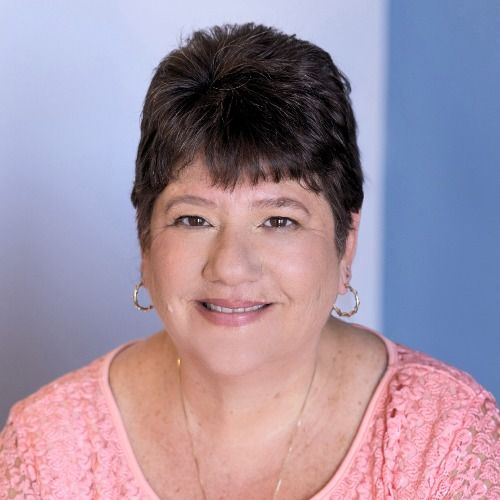
Jenny Ousbey is Chief Executive Officer and Founder of OVID Health, an award‑winning healthcare communications consultancy she established in 2018. A recognised industry leader in patient advocacy and health communications, she is known for driving integrated strategies across public affairs, PR, and stakeholder engagement to support pharmaceutical, biotech, and health organisations globally. She is also the creator of the Patient Partnership Index and host of the Health Change Makers podcast, and regularly speaks on topics including political influencing, patient advocacy, and women’s health.
Prior to founding OVID, Jenny held senior roles across government, policy, and communications. She led health public affairs at the NHS Confederation and served as a senior political adviser to a UK Care Services Minister during a pivotal period in national health policy. Her career reflects a consistent focus on shaping health policy, advancing the patient voice, and delivering impact through strategic communications.
About the Hosts
Abbie Fink is president of HMA Public Relations in Phoenix, Arizona and a founding member of PRGN. Her marketing communications background includes skills in media relations, digital communications, social media strategies, special event management, crisis communications, community relations, issues management, and marketing promotions for both the private and public sectors, including such industries as healthcare, financial services, professional services, government affairs and tribal affairs, as well as not-for-profit organizations.
Dr. Adrian McIntyre is a cultural anthropologist, media personality, speaker, and strategic communications consultant for PR agencies and marketing firms. He's lived in over 30 countries and spent more than a decade in the Middle East and Africa as a researcher, journalist, communications adviser, media spokesperson, and storytelling consultant. He earned a PhD from the University of California, Berkeley, where he was a Fulbright scholar and National Science Foundation fellow. Adrian helps agency leaders strengthen their positioning, sharpen their messaging, boost their visibility, and win new clients by replacing impersonal, intrusive and ineffective marketing tactics with authentic human conversations.
Follow the Podcast
If you enjoyed this episode, please follow PRGN Presents in Spotify, Apple Podcasts, or any other podcast app. We publish new episodes every other Thursday. To have them delivered automatically and free of charge, just choose your preferred podcast player from this list, open the app, and click the button to “Follow” the show: https://prgnpodcast.com/listen
Need to hire a PR firm?
Leading a business effectively in today's fast-paced world requires expert guidance and a strong communications strategy. No matter where you do business, PRGN has a member agency in your region with the deep industry expertise, international experience, and local market knowledge you need to connect with your target audience and achieve your goals. Find a PR firm near you »
Transcript
From the Public Relations Global Network, this is PRGN Presents. I’m Adrian McIntyre.
Abbie Fink:And I’m Abbie Fink, President of HMA Public Relations in Phoenix, Arizona and a founding member of PRGN. With public relations leaders embedded into the fabric of the communities we serve, clients hire our agencies for the local knowledge, expertise and connections in markets spanning six continents across the world.
Adrian McIntyre:Our guests on this biweekly podcast series are all members of the Public Relations Global Network. They will discuss such topics as workplace culture, creative compensation and succession planning, the importance of sustainability and environmental, social and governance programs, crisis communications, and outside of the box thinking for growing your business.
Abbie Fink:For more information about PRGN and our members, please visit prgn.com. And now let’s meet our guest for this episode.
Jenny Ousbey:Hi everybody, I’m Jenny Ousbey. I’m the CEO and founder of OVID Health. We are a health specialist consultancy based in London but working globally and across Europe as well as the UK for mainly pharmaceutical and life science firms, also with medical devices, med tech companies and patient organizations. And we do three things. We do public affairs, PR and communications and patient advocacy and engagement. I have a wonderful team of specialist consultants, and I’m looking forward to today’s conversation.
Abbie Fink:Well, Jenny, I’m, I’m intrigued by any conversation around healthcare and the emphasis on advocacy, patient advocacy, and I think the conversations. And I have aging parents, so we’re spending a lot of time talking about how are they getting information and the various ways that they get their information. How are they supposed to determine which is the right response? They are of a generation that, you know, anyone in a white coat and a stethoscope is authority.
Abbie Fink:So if they take that information, you know, verbatim and believe in it wholeheartedly and as they should. But you know, we come from a generation that’s a little more inquisitive. We ask a few more questions, we, we engage in a variety of different ways. So I was really looking forward to this conversation because I’m personally vested in how we are communicating with patients, consumers, because I am managing that for my parents. But certainly from a business perspective, the importance of that from the brands and the organizations themselves.
Abbie Fink:So as a specialist in that area and thinking about just the plethora of ways that information is shared these days, maybe to start off the conversation, you know, what are you seeing in terms of trends or areas that are really resonating with, you know, in this patient centered communications effort? You know, what is, from your knowledge and expertise and your years of experience, where are we at in terms of how this is trending today?
Jenny Ousbey:Yeah, thanks, Abbie. And I just think, you know, you’ve touched on trust and information in the start of the conversation and you know, everybody knows we’ve got massive information overload at the moment. And you know, you talked about your parents generation and we’ve also got the contrast of Gen Z trusting influencers over doctors. You know, most of the surveys say that’s what they’re doing at the moment.
Jenny Ousbey:And then you’ve got the other side of the coin, which is, you know, for example, I think it’s on TikTok. 90% of the health TikTok accounts are misinformation. It’s false. You know, use an example, ADHD. There are 20 billion posts right now about ADHD on TikTok and yet half of them are wrong. It’s false information. And so you’ve got your parents’ generation who still trust the doctor when they come into the room and they give them a diagnosis or they give them treatment and yet you’ve got this huge mistrust, but also just information coming at everybody.
Jenny Ousbey:And some ways that’s good, right, because patients are more empowered than ever. You know, you or I, you know, I went to go and see an ophthalmologist earlier today and you know, I did what most people do, which is Google my symptoms before I got in contact with them to have an appointment. And you know, and, and they know that because, you know, I was at a conference last week and half of healthcare professionals, sorry, it was a, in a conversation that the panel were having and this recent survey, and this is in the uk, but I strongly suspect it’s replicated in, you know, the U.S. for example, and across Europe, is that at least half of doctors are using large language models to provide them as their primary source of information when they’re diagnosing patients.
Jenny Ousbey:So then you have the challenge with my clients who, you know, for example, we work with pharma companies, they want to make sure that they have patient centered content and content that appeals to not just the prescribers, but also to the patients. But you know, doctors don’t read their emails anymore, but they might be going on chatgpt just as the patient’s going on chatgpt. And yet what we’re feeding the machine really, really matters. So, you know, at OVID Health it’s, how are we constantly trying to think about not only can we, how can we influence the right platforms, but most importantly, who do people trust and how do we make sure that the message is being delivered by then?
Jenny Ousbey:Because, you know, doctors are no longer one of the most trusted professions anymore in Europe, and Covid had a big part to play in that. And so how do we, you know, for example, tackle the huge problem around vaccine uptake, which is, you know, causing children to die of diseases across Europe that they didn’t used to die from five years ago? You know, like getting health communications right is, you know, that like, literally saves lives. And that’s why I work in health communications, because I love it. And, you know, we’re all telling a story ultimately in any area of communications. And how you tell the story right now matters.
Abbie Fink:Well, and the how probably maybe more so than the what is. How is it coming across? And I think it’s, it’s, it’s troubling to me that we as a society are as willing to accept information as fact simply because it is given to us. And again, there are certain individuals that we should trust based on their knowledge and expertise. They are educated, they are trained, they have experience in. And all of us can create content and be, you know, influencer and such, and it isn’t necessarily based in fact. And so when you’re, you know, a professional communicator and the services that you offer to your clients, there’s what you know to be right and true in the way to do that. And then there’s this ability to sort of combat the other misinformation, disinformation that’s out there and create the pattern, create the cadence with that information, that the trust level continues to increase.
Abbie Fink:And maybe because as patients or consumers, we have become much more engaged in our own, in this particular case, our own healthcare. Right. I do the same thing for myself. I do it for my dog. What, she’s sneezing. What does that mean? And I’m hope, you know, I’m smart enough to say I’m going to try a couple different sources. I’m not going to take the first one. I’m going to dig in a little bit. Not everybody does that.
Abbie Fink:So, you know, as you’re creating campaigns and information, you know, to put out into the community, into their, you know, to the target audiences that you’re trying to reach, you know, how are you analyzing? How are you determining what is not necessarily the right information, but the right channels by which the information comes out to ensure that it’s being received appropriately. And as you said, it’s not just the end user that’s using it, but the influencers themselves, the doctors, the others that are gathering that same content.
Jenny Ousbey:Yeah, it’s a really good question. And I think that one of the related challenges is also how can we be curious at the start of a campaign, for example, in disease awareness? Because the worst thing you can do is to make assumptions. So I’ll give, give an example. You know, a couple of years ago, we were working at prostate cancer and a client came to us and said, you know, we think that we need to do a campaign around getting men to take a pill for prostate cancer, a particular type of prostate cancer.
Jenny Ousbey:And we were like, okay, great, we’ll go away and have a think about it. And what we did is we did some social media analysis of all the conversations that were happening around this particular type of prostate cancer. And actually the client’s assumptions were wrong because actually what people wanted is a more invasive treatment, but that meant that they had to go and get an injection, which meant that they had to go to the hospital once a month.
Jenny Ousbey:Now, the client’s not unreasonable assumption was that people don’t want to go to the hospital once a month. It’s a faff. They have to travel. You know, it’s far more convenient to take a pill once a week. And actually what we found was that, no, actually people would rather the expense and the time out of their diary to go once a month to a hospital because they get face to face time with a consultant.
Jenny Ousbey:You know, and that factor actually outweighed the convenience factor. And in that instance, it was, in terms of your question around channels, it was, you know, TikTok is not the right channel to reach men 65 to 85. What might be the right channel is Facebook. Because actually the average age of someone on Facebook is, I think it’s 57 now. It might even be a bit older. But also not just the right channel, but who’s the right person?
Jenny Ousbey:So again, thinking deeper, looking at it through another lens, often, not always, but in this particular group of patients, it wasn’t just men that were making the decisions about their treatment. Actually, often it was their female partners that have the most health conversations about their treatment and not always them. So actually, how can we influence the wives and the girlfriends of older men and not just the men themselves, because that’s a trusted source.
Jenny Ousbey:So that’s thinking about, okay, so where are the Facebook groups where these people meet so that we can influence that? I think another really good example is women’s health is a brilliant example of how do you get the channels right and how can you get it wrong? How do you create trusted sources? You know, it’s very popular at the moment to use celebrities to deliver health messages. And sometimes that can be amazingly helpful because, you know, you can do in the space of a month and one amazing media appearance that would take a year of cut through on a topic.
Jenny Ousbey:But equally, sometimes getting celebrities involved can be quite damaging. You know, I’ve seen areas in like menopause policy and menopause messaging that’s actually deeply unhelpful and not scientific. So you’re constantly thinking about, okay, a big celebrity campaign in a newspaper or on the TV might be the best way to get across a really important health message. Equally, how can we back that up with like clinically approved data and get a clinician who has a TikTok account who comes with a lot of credibility because we’re trying to talk to 20 to 25 year old women and actually the two together is the best combination.
Abbie Fink:The who that delivers the message in that conversation is what really, what resonated with me on that, right? It’s not just, you know, I’m a doctor, hi, I’m an actress and I play a doctor on TV kind of thing. I mean, you really have to come with some, some credibility and some, you know, personal knowledge and expertise or at least be willing to trust that the content you’re, you know, you’re being asked to put out there actually is, you know, valuable and you’ve been vetted to be the right person to talk about it.
Abbie Fink:You touched in there in a little bit on policy and healthcare policy, and that’s obviously a slightly different conversation around that. And you know, vaccinations, medication, all of those things are very personal choices. We may have an understanding of the value of them, but there’s a lot of personal discussion around whether I’m going to do this or that. Regardless of what the medical community says or what the health department says, it’s my personal choice.
Abbie Fink:Personal choice became very much a part of the dialogue over the last five to seven years with Covid discussions and things. My body, my choice is part of that conversation. How are you impacting policy decisions and discussions? How do you advise your clients on when and where they should get involved in those kind of discussions, whether they’re leading the charge or not? Because sometimes speaking up and speaking out can be beneficial to an organization. Other times it may be detrimental, but they may still need to have a voice in policy discussions. So what are you, if at all, advising in that regard?
Jenny Ousbey:Yeah, it’s a good question. And just as an aside, I always think a TV doctor or a storyline in a medical drama is one of the best ways to get across a health information message. Yeah. So, for example, let’s take measles as a good example of the debate around, you know, that’s highly emotive. You’ve got differences of opinion in different countries. Some vaccination rates are better than others. And we always say to our clients, you’ve got to have, you’ve got to have the kind of hard policy facts and the clinical evidence, but you have to back it up with something that’s emotionally resonant. So, you know, and it’s a really simple formula. It’s like, what’s the human story that you can tell that backs up the clinical evidence that getting vaccinated, you know, getting your kid vaccinated against measles not only protects you, but it protects your community, your child, the kids in your child’s class, you know, et cetera.
Jenny Ousbey:So, you know, one example would be when we were thinking about this for a particular client and there’d been some measles outbreaks and some children had sadly died, that I was talking, I happened to be talking to the director of a well known children’s hospital and I said to this person, I said, right, if you could wave a magic wand and be in charge of making health policy decisions and making decisions on where we spent our money and all that kind of stuff, I was quite surprised because I thought he was going to say something about, I don’t know, we need to spend more in pediatric oncology or, you know, children’s rare diseases or something like that, because that’s what they specialize in as an organization.
Jenny Ousbey:But actually what he said was, no, do you know what? Actually, I see families coming through our doors on an almost daily basis and their children are either seriously ill or potentially going to die from a simple preventable reason. And that is a tragedy. He’s like, that is not just a personal tragedy, that’s a national tragedy. It’s an international tragedy. So he said, you know, the one thing I would do is, in policy terms is give hospitals the ability to vaccinate children as soon as they walk through their doors. If they’re unvaccinated, we have the power to vaccinate them.
Jenny Ousbey:And actually because. And that’s where the health messaging comes in to say, this is not just about your child. This is about protecting the child down the road. This is about making sure that, you know, a parent has to go, doesn’t have to go through, you know, the worst thing in the world. So combining that with Statistics around clinical evidence, as we talked about, trusted sources, trusted channels.
Jenny Ousbey:And the reason I give the hospital director as an example is because that’s not a typical spokesperson for that type of debate. Often it’s a clinician rather than as somebody who’s kind of standing back and seeing the bigger picture. But, you know, in some countries, naming no countries in particular, that debate is pretty. Is a lot more toxic than it might be in Europe. So, you know, there’s obviously there’s a global conversation to be had. Right, about vaccine misinformation.
Jenny Ousbey:And that’s where, you know, for example, we do. My colleague does quite a bit of work in global public health. And you have, you know, completely different but related challenge. You have an Ebola outbreak at the moment in parts of Africa. And, you know, that’s a challenge in and of itself because you have communities that very understandably don’t trust the health information that’s been given to them and who’s giving it to them.
Jenny Ousbey:And that’s not something that you can change overnight. And that’s something where, again, incremental communications on the ground, showing different communities that you understand the cultural and the social nuance in order to save lives is what we need to do. And sometimes it has to be super tailored and super local.
Abbie Fink:Yeah, I say that grassroots efforts, those very local, local conversations about what matters in your specific community. We do a lot of work with tribal communities, Native American communities. We have similar discussions around healthcare and such from a cultural perspective, as well as what they know from being a part of a larger community, but also from their own internal, insular community. What do those discussions look like? And, and it isn’t always appropriate to attempt to change minds as much as it is to provide them with as much information as you can and guide them towards decisions that they can be comfortable with.
Abbie Fink:And I think it’s an interesting discussion, especially in our very global society that we live in now and that we have access to information from so many different places and from so many different sources to. To gain consensus on any topic is virtually impossible. And I think the, you know, approaching any topic from a, you know, with a. With a look towards the global impact. And whether we’re talking about healthcare or we’re talking about selling shoes, I think it still has a global connection to it and really requires those of us that are counseling clients in, in their communications and understanding the impact of the things that they’re doing is there’s the part that says we need to tell this information, and then there’s the Other part that we need to understand the impact of what that’s going to be once it’s out there.
Abbie Fink:And the long-term effect of the conversations we’re having today, what that’s going to be into the future. And that really integrated and fully thought-out communication strategy is more than just what are we doing today, but what do we have to do long term.
Jenny Ousbey:Yeah. And actually when you, when you’re saying that, I was thinking, so great example, dementia and Alzheimer’s, right? It’s one of the things that when you ask someone on the street, what are you most scared of being diagnosed with? And Alzheimer’s will generally come out in your top three top five answers. And yet in the world today, right now that, you know, we can’t turn around to anybody and say, oh, you’ve been diagnosed with Alzheimer’s. Right.
Jenny Ousbey:Here’s the treatment that I can put you on. I hope that there will be a different answer in the not too distant future. But that’s what you have to say. And yet it’s still important. And you know, some of the clients we work, work with are having conversations and doing disease awareness campaigns about the signs and symptoms of Alzheimer’s and what you can do to manage that condition. But that’s when you have to have a really grown up conversation with a patient community and a carer community to say, we can help you understand the signs and symptoms and talk to a healthcare professional early.
Jenny Ousbey:But there’s no treatment right now. So that’s actually a really difficult one because often in healthcare communications the end goal is can we raise awareness of X, Y, Z thing so that we increase the number of people who are going to see their doctor to get diagnosed and therefore get the right treatment for them or get access to the right medication. Now that’s not to say that we shouldn’t be talking about the signs and symptoms of Alzheimer’s and we shouldn’t be making people aware of it.
Jenny Ousbey:But that’s where, and I do think, you know, sometimes we make the mistake that almost patients can’t be trusted to handle more nuanced healthcare messages. And actually if you deliver it in the right way, people don’t want to be patronized and it’s okay to say we can tell you this thing, but actually right now science doesn’t have the answer to that. But this is the, you know, but in the next five years, the next 10 years, it may have an answer to this in Alzheimer’s. And isn’t that the wonder of science and innovation?
Jenny Ousbey:You know, and we saw There were positives that came out of COVID And one of the things was people understanding that when you have great risk to your health, the science community can mobilize super quickly to deliver something that saved millions and millions of lives. And so how do we build on that legacy for Alzheimer’s, for, you know, the big killers like cardiovascular disease? You know, one. Well, I’m, I’m a total geek, so I’m constantly reading interesting stats and like, squirrel, squirreling them away in the back of my mind.
Jenny Ousbey:And, you know, one of the stats I found out recently, which I did, I didn’t know as someone who worked in health communications, was that women are 17 times more likely to die of a heart attack than they are of breast cancer. Right. But I can almost guarantee that most women would know the signs and symptoms of breast cancer than they would the signs and symptoms of a heart attack. And so that’s a classic case of where can health communications play a role in, in making, in empowering people to make decisions about their health? Because sometimes we don’t know, even if we’re super educated and we read the news and we ask our doctors the right questions.
Jenny Ousbey:And that’s why I’m always constantly excited every day working in health communications, because there’s something new I can learn and a way in which we can tell a better story to mean that people get the right treatment and help keep themselves healthy.
Adrian McIntyre:Thanks for listening to this episode of PRGN Presents, brought to you by the Public Relations Global Network.
Abbie Fink:We publish new episodes every other week, so subscribe now in your favorite podcast app. Episodes are also available on our website, along with more information about PRGN and our members, at prgn.com.